Power Is No Longer Just Oil
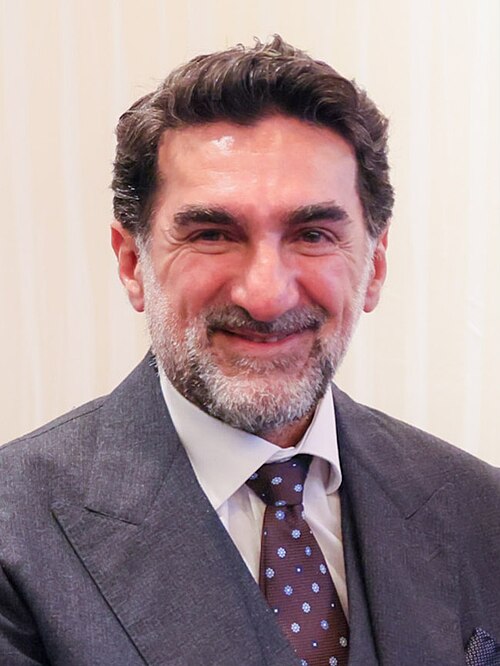
H.E. Yasir Al-Rumayyan, Governor of the Public Investment Fund (PIF), Saudi Arabia in the official communication “PIF 2026–2030 Strategy Announcement” (April 15), stated:
“PIF’s strategy continues to deliver results as we grow domestically and internationally. In less than a decade, we have launched unprecedented projects, including giga-projects and major real estate developments, in addition to unique investments in strategic sectors such as artificial intelligence, gaming and esports, and renewable energy. PIF also grew assets under management six-fold and attracted global partners and capital to take part in Saudi Arabia’s transformation.
The 2026-2030 strategy is a natural next step in PIF’s growth journey. It offers our partners more opportunities to invest in high-quality assets and ecosystems, alongside PIF.”
If you read this carefully, it is less a statement and more a signal. The language is not about catching up, it is about positioning. What stands out is not just scale, but intent. The emphasis on ecosystems, partnerships, and sectors like AI and gaming suggests that the region is thinking beyond infrastructure and into influence.
For decades, the Middle East’s relevance was tied to what it extracted. Now, it is increasingly tied to what it builds. And that distinction matters. Extraction creates dependency; creation builds leverage. When capital begins to shape industries, rather than simply flow through them; it starts to alter the direction of global growth itself.
What we are witnessing is not diversification in the conventional sense. It is a quiet rebalancing of where future industries will be anchored. And that, more than any single project, is where real power begins to shift.
Capital That Doesn't Rush
According to the World Bank’s latest MENAAP Economic Update (April 2026), regional growth is projected to slow sharply to 1.8% in 2026, with GCC growth downgraded significantly due to the ongoing conflict.
Ousmane Dione, Vice President, Middle East, North Africa, Afghanistan and Pakistan, The World Bank, in an official communication on 8th April 2026 said:
“The current crisis is a stark reminder of the work ahead for the region: not only to weather shocks, but to rebuild more resilient economies with stronger macroeconomic fundamentals, innovate and improve governance, invest in infrastructure, and boost employment-creating sectors.
Peace and stability are preconditions for the region’s durable development. With peace and the right action, countries can build the institutions, capabilities and competitive sectors that create opportunities for people.”
There is something important in the way this is framed. The focus is not just on recovery, but on resilience. And that distinction changes the entire conversation. Recovery implies returning to where things were. Resilience suggests building something stronger than before.
What stands out is the emphasis on fundamentals: governance, infrastructure, employment. These are not short-term levers. They are structural. And when institutions begin to focus on structure rather than cycles, the nature of growth itself begins to change.
In a world where capital often moves quickly and unpredictably, stability becomes a competitive advantage. Regions that can offer clarity, governance, and long-term direction attract not just investment, but confidence.
This is where the Middle East is quietly repositioning itself. Not just as a destination for capital, but as a system that can absorb shocks, adapt, and continue to grow. And in a volatile global environment, that kind of consistency is not just valuable: it is powerful.
KEY NUMBERS
- 1.8% projected regional growth (2026)
- Sharp downgrade due to conflict impact
- GCC economies most affected
When Geography Becomes Fragile
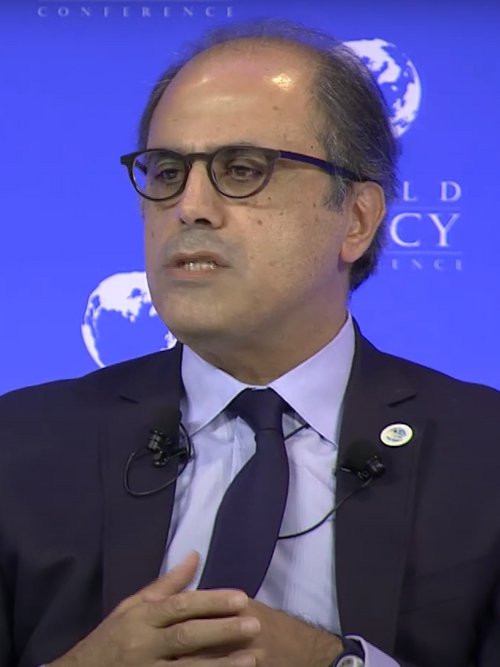
Jihad Azour, Director of the Middle East and Central Asia Department at the International Monetary Fund (IMF), said while releasing the IMF’s April 2026 Regional Economic Outlook on April 16:
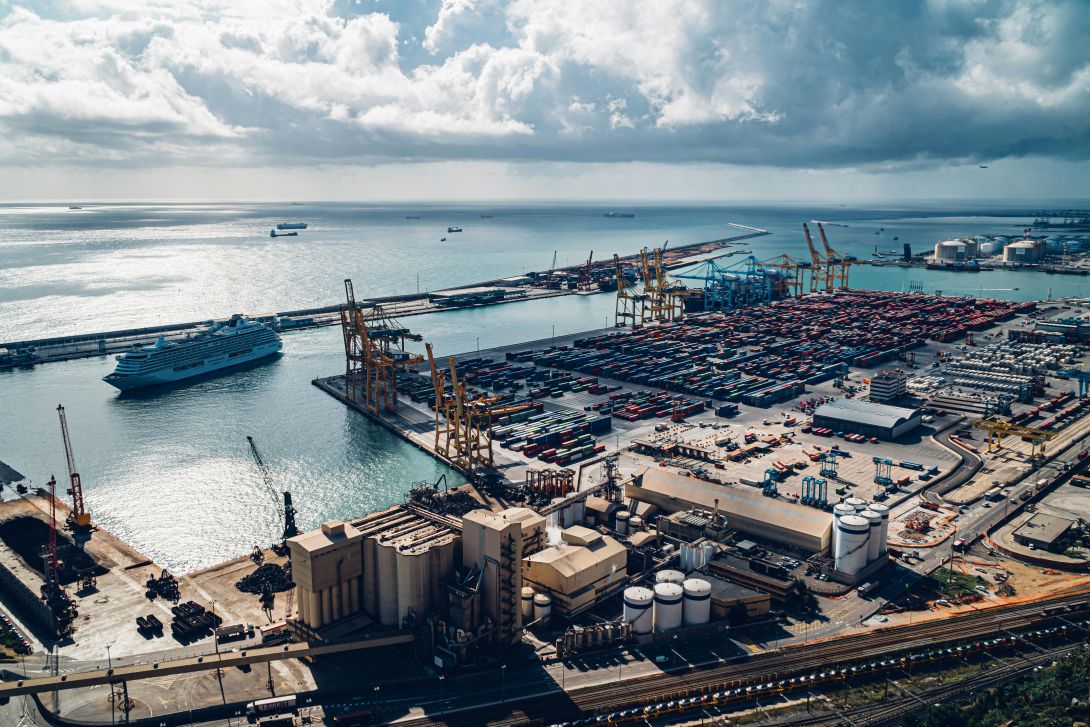
“The outbreak of war on February 28th has delivered a severe and multifaceted shock to one of the world's most strategically important economic corridors, disrupting three pillars of stability: energy markets, trade routes, and business confidence.”
What makes this observation striking is how it connects geography with fragility. Trade routes and energy corridors are often seen as constants; fixed lines on a map. But in reality, they are highly sensitive systems, dependent on stability that can shift overnight.
The phrase “multifaceted shock” is telling. It suggests that disruptions are no longer linear. A single event can ripple across energy, logistics, finance, and sentiment all at once. This is the kind of complexity global markets are still learning to navigate.
For the Middle East, this creates a dual identity. It is both indispensable and unpredictable. And for the rest of the world, that means engagement with the region is no longer optional; it is necessary, even when it is uncertain.
The Subtle Language of Oil
Organisation of petroleum exporting countries (OPEC) states in the official communication on its website that:
“In their collective commitment to support oil market stability, the eight participating countries Saudi Arabia, Russia, Iraq, UAE, Kuwait, Kazakhstan, Algeria, and Oman decided to implement a production adjustment and reaffirmed the importance of adopting a cautious approach and retaining full flexibility’’
What stands out here is not the adjustment itself, but the wording around it: cautious, flexibility, commitment. These are not accidental choices. They reflect a shift in how energy power is exercised.
There was a time when oil policy was blunt and reactive. Today, it is measured and strategic. The goal is no longer just control, but calibration. Markets are being managed with an awareness of their global consequences.
And those consequences are far-reaching. Energy prices shape everything—from manufacturing costs to airline tickets to luxury consumption. When oil moves, entire sectors recalibrate.
In that sense, energy is no longer just a commodity. It is a language through which the region communicates with the global economy.
OPEC+ COUNTRIES
Saudi Arabia | Russia | Iraq | UAE | Kuwait | Kazakhstan | Algeria | Oman
Planning the Future, Not Predicting It
As stated on the official roadmap of the United Arab Emirates: “The UAE's Future Roadmap indicates sustainability and progress in various fields such as health, education, infrastructure, tourism, science, environment and achievement of the UN's Sustainable Development Goals.”
“‘We the UAE 2031’ vision aims to double the country’s gross domestic product (GDP) from AED 1.49 trillion to AED 3 trillion.”
There is a difference between forecasting the future and designing it. The UAE’s approach leans clearly toward the latter. The roadmap reads less like a prediction and more like a declaration of intent.
What is particularly notable is the breadth; health, infrastructure, environment, science. This is not sectoral thinking; it is systemic. It reflects an understanding that growth is not isolated: it is interconnected.
This kind of planning sends a signal to the world. It tells investors, businesses, and institutions that the environment they are entering is structured, deliberate, and forward-looking. And in an uncertain global climate, that kind of clarity becomes incredibly attractive.
The Quiet Power of Efficiency
As stated on the official roadmap of the United Arab Emirates: “Dubai Autonomous Transportation Strategy aims to transform 25 per cent of the total transportation in Dubai to autonomous mode by 2030.”
“The strategy is expected to bring AED 22 billion in annual economic revenues in several sectors by reducing transportation costs, carbon emissions and accidents, and raising the productivity of individuals.”
At first glance, this is about transport. But look closer, and it is about time. Efficiency, after all, is ultimately about how time is used, saved, and optimized.
Autonomous mobility is not just a technological upgrade: it is a shift in how cities function. It changes commuting patterns, productivity cycles, and even lifestyle choices. It frees up hours that can be redirected into work, leisure, or consumption.
And this is where it connects to the broader economy. When time becomes more efficient, so does spending. Experiences expand. Consumption evolves. Entire sectors—from retail to hospitality—begin to adapt.
ECONOMIC IMPACT
- ▪ AED 22 billion annual economic value
- ▪ 25% autonomous transport by 2030
- Where Capital Meets Aspiration
- There is an interesting shift happening in how luxury is defined. It is no longer just about exclusivity: it is about environment. The spaces people inhabit, the cities they experience, the systems they interact with.
- Middle Eastern capital is increasingly shaping these environments. It is building destinations, not just assets. And in doing so, it is influencing how aspiration itself is experienced.
- Luxury, in this context, becomes less about ownership and more about access: to experiences, to innovation, to well-designed ecosystems.
A Different Kind of Power
The Middle East today is difficult to define in a single dimension. It is not just an energy hub, nor just a capital centre, nor just a geopolitical region. It is all of these at once and increasingly, something more.
What is emerging is a form of power that is layered. It operates through capital, through policy, through infrastructure, and through influence. It is not always visible, but it is deeply felt across markets.
And perhaps that is the most important shift of all. Power here is no longer loud or reactive. It is strategic, patient, and increasingly global.
The world is not just watching this transformation. It is, in many ways, being shaped by it.
THE SHIFT
- ▪ From oil to capital
- ▪ From reaction to strategy
- ▪ From region to global influence